Bridal Boutique Inventory Mistakes That Kill Profit Margins
Running a bridal boutique is unlike almost any other form of retail. The emotional weight of what you sell — the sheer significance of it — can mask some deeply practical problems until they’ve quietly eaten through your margins for months. You’re so focused on the experience you deliver that the inventory spreadsheet gets pushed to one side. And then, suddenly, a dress that cost you £400 has been hanging on the rail for fourteen months and nobody has so much as breathed on it.
It happens. But it doesn’t have to keep happening.
This guide is written specifically for boutique owners and buyers who want to sharpen their bridal boutique inventory management, stop leaving money on the floor, and build a stock profile that actually performs. Let’s get into the real mistakes — the ones that don’t always get talked about.
Why Inventory Management Matters More in Bridal Than Anywhere Else
Before the mistakes, it’s worth understanding why this category is so unforgiving. Bridal dresses carry high unit costs, long lead times, and a customer base that tends to buy exactly once. There’s no repeat purchase cycle to bail you out. A wedding dress that doesn’t sell in season doesn’t usually get a second chance — it just gets marked down, loaned out, or quietly retired. Every poor stocking decision costs more here than it would in womenswear or occasionwear.
That’s why bridal stock planning isn’t just a back-office task. It’s a frontline business decision that shapes your profitability directly.
Mistake 1: Over-Ordering Because the Minimum Order Quantities Felt Like a Bargain
This is the big one. A supplier offers you a minimum order at a strong per-unit price, and suddenly the maths feel compelling. Order eight instead of four and the unit cost drops by 15%. Fine — if all eight sell. But in a boutique with limited floor space and a customer base that runs into the hundreds, not thousands, you don’t always need eight of anything.
Over-ordering in bridal is almost always driven by one of three things: supplier incentives, a fear of running short on a bestselling style, or optimism after a strong trading month. All three are understandable. None of them are good enough reasons to commit to stock you haven’t got demand for.
The Fix:
Work backwards from your actual footfall and your conversion rate. If you see forty brides a month and convert roughly a third, you need to support around thirteen to fifteen purchases. Now ask honestly: how many of those will go to any single silhouette or price point? Build your order quantities around real numbers, not aspirational ones.
Mistake 2: Ignoring the Dead Stock That’s Already in Your Rails
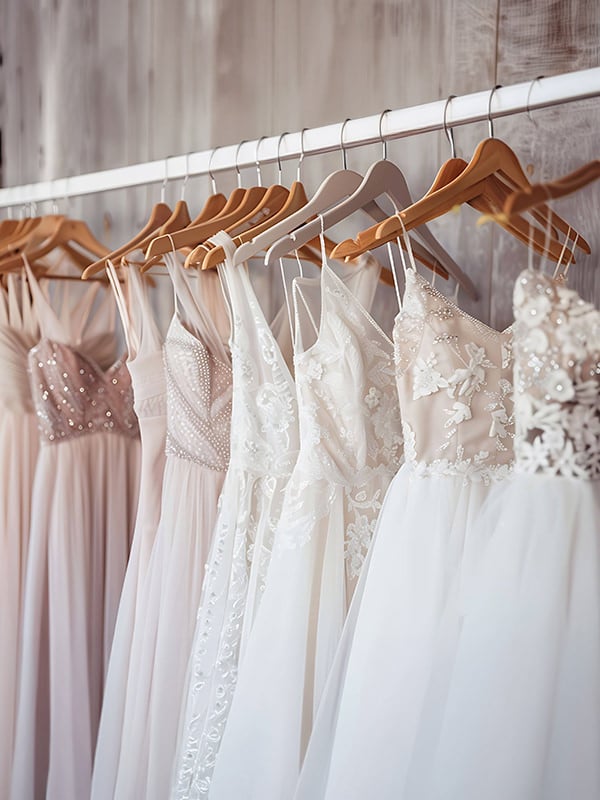
Dead stock in bridal has a particular kind of cruelty to it. A gown that nobody wants still takes up the same physical and psychological space as one that could be selling. It crowds out your bestsellers. It muddies your visual merchandising. And it keeps tying up capital that could be working harder elsewhere.
The uncomfortable truth is that most boutiques have at least some dead stock sitting in plain sight, and the owners have stopped seeing it. The sample that came in eighteen months ago, tried on twice, and never re-ordered. The dress from a discontinued range that you were going to “do something with” at the next sale.
Dead stock issues in bridal tend to compound. The older a dress gets, the harder it is to move. Brides are acutely aware of trends — even when they say they’re not — and a gown that looks dated on the rail is not going to get a second glance.
The Fix:
Set a formal review cycle. Every ninety days, pull a list of everything that hasn’t had a try-on in sixty days. Make a deliberate decision about each piece — markdown, sample sale, styled shoot, or write-off — rather than letting time make the decision for you. Clarity here is not ruthlessness. It’s good bridal retail strategy.
Mistake 3: Not Tracking Slow-Moving Dresses Before They Become Dead Stock
There’s a window — and it’s not very wide — between a dress that’s slow and a dress that’s dead. Slow-moving dresses in bridal are the ones that have been on the floor for three to four months with minimal trial activity. They haven’t failed yet, but the trajectory isn’t good.
The mistake most boutiques make is not catching them at this point. They wait until the gown is well and truly stagnant, then panic-discount it, which damages the perceived value of everything around it.
Catching slow movers early gives you options. You can reposition the dress in the boutique — sometimes a different lighting spot or a new styling approach is genuinely all it takes. You can feature it in a social post or a styled shoot. You can brief your consultants to actively introduce it during appointments. Or, if none of that moves the needle, you can choose to exit it tidily rather than desperately.
The Fix:
Tag every incoming sample with its arrival date. Track trial numbers monthly. Any dress with fewer than three trials in its first eight weeks should go on a watch list. You don’t have to act immediately, but you should be paying attention.
Mistake 4: Treating Accessories as an Afterthought
This one isn’t quite an inventory error in the traditional sense, but it costs boutiques real money every single week, so it belongs here.
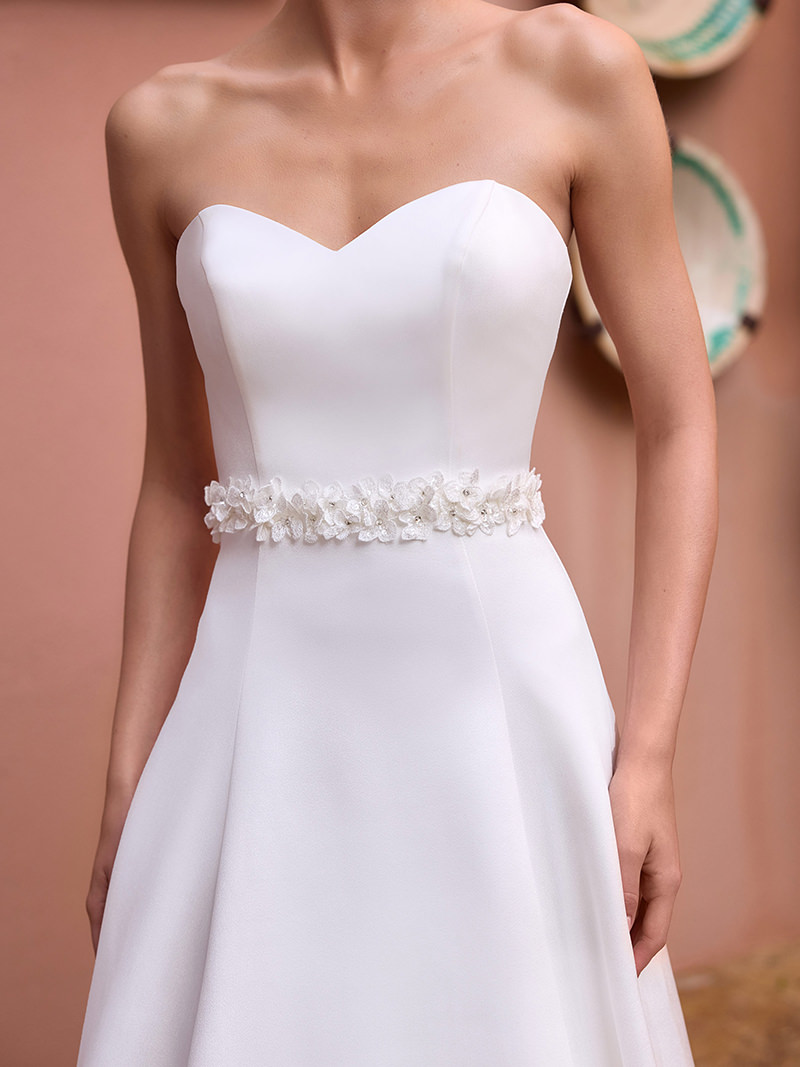
Accessories upselling in bridal is one of the most reliable revenue opportunities available to a boutique, and most of them underperform it significantly. Veils, jewellery, hair pieces, belts, shoes — these items carry strong margins, they don’t take up much floor space, and the customer is already in a buying mindset. She’s just said yes to a dress. She’s emotionally invested. She wants to complete the picture.
Yet countless boutiques either don’t stock accessories at all, or they keep them in a drawer somewhere and mention them almost apologetically at the end of the appointment.
The Fix:
Integrate accessories into the appointment experience, not as an add-on at the end but as part of how you present the dress. When a bride puts on a gown, style it. Put a veil on her. Place a hair piece. Let her feel the full look. Most brides don’t decide to buy a veil. They see themselves in one and simply can’t take it off.
Accessories upselling isn’t pushy retail. It’s good curation. It also meaningfully improves your average transaction value without requiring you to sell a single extra dress.
Mistake 5: Buying Without a Clear Price Architecture
Every boutique should have a deliberate spread across price points — entry, mid-range, and aspirational — that reflects what their actual customer base can and will spend. When this architecture breaks down, you get a stock profile that confuses brides, complicates the consultation, and tends to cluster at price points that either don’t convert or don’t make enough margin.
A common version of this mistake: a boutique buys heavily at mid-range because that’s where the owner feels most comfortable, but doesn’t stock enough at the entry level to capture brides with tighter budgets, and nothing aspirational enough to give the room a sense of occasion.
The result is a showroom that feels flat. And flat showrooms don’t inspire the kind of emotional decision-making that bridal retail depends on.
The Fix:
Map your customer enquiries by budget range over the last six months. If you don’t have that data, start collecting it now. Let the numbers guide your next buying season rather than instinct alone.
Choosing the Right Supplier Makes All of This Easier
None of the above is solvable without a reliable supply chain behind you. Working with a reputable, affordable bridal dress supplier doesn’t just help with your unit economics — it gives you the flexibility to order more precisely, restock what’s working without massive minimum commitments, and pivot when something isn’t moving.
At Bianco Evento, we work directly with bridal boutiques across the globe to provide a curated collection that supports smarter bridal stock planning. Our range is designed with the boutique buyer in mind — commercially considered price points, a silhouette mix that covers the breadth of what today’s brides are looking for, and the kind of quality that holds up to repeated trials without losing its appeal.
We understand that boutique owners aren’t just buying dresses. They’re managing cash flow, floor space, appointment conversion, and a customer experience that has to be exceptional every single time.
A Note on Using Data to Drive Decisions
One of the most consistent differences between boutiques that manage inventory well and those that don’t is not the quality of their instincts. It’s whether or not they’re looking at numbers regularly.
You don’t need sophisticated software to do this well. A simple spreadsheet tracking arrivals, trial activity, and sales by style gives you more than enough to make better buying decisions. The goal is to move from reactive stock management — buying because you’re running low on something — to proactive stock management, where you’re anticipating demand and shaping your range accordingly.
Summary: The Inventory Health Checklist for Bridal Boutiques
Good bridal boutique inventory management comes down to a handful of consistent habits:
- Review slow-moving stock monthly, not seasonally
- Set hard timelines for when a dress moves from “slow” to “exited”
- Order based on conversion data, not supplier minimums
- Build accessories into the appointment experience from the start
- Maintain a deliberate price architecture across your range
- Work with suppliers who support flexible, commercially sensible ordering
Getting this right won’t just protect your margins. It’ll change how your boutique feels — to you and to every bride who walks through the door.