How to Make Any Wedding Dress Yours With Bridal Belts & Sashes: A Boutique Guide
Walk into most bridal boutiques and ask which single item sells the fastest, needs the least stockroom space, and rarely comes back for alteration, and the answer is unlikely to be the gown on the mannequin in the window. It's far more likely to be sitting quietly on a small display stand near the till — a belt or sash that costs a fraction of a dress to stock, takes seconds to try, and often turns a “just browsing” appointment into a completed sale.
Bridal belts have a strange reputation in the industry. They're treated as an afterthought — something to offer at the end of a fitting almost as a courtesy — when the reality is closer to the opposite. Done well, they're one of the highest-margin, fastest-moving categories a boutique can stock, and one of the few genuine ways a bride can make an off-the-rack gown feel entirely her own without touching a single seam.
This guide works through how bridal belts and sashes actually change a gown's line, how to match the right style to the right dress and body shape, and — the part most bridal styling content skips entirely — what separates a bridal belt supplier worth building a category around from one offering an afterthought.
Why Bridal Belts Deserve More Than an Afterthought
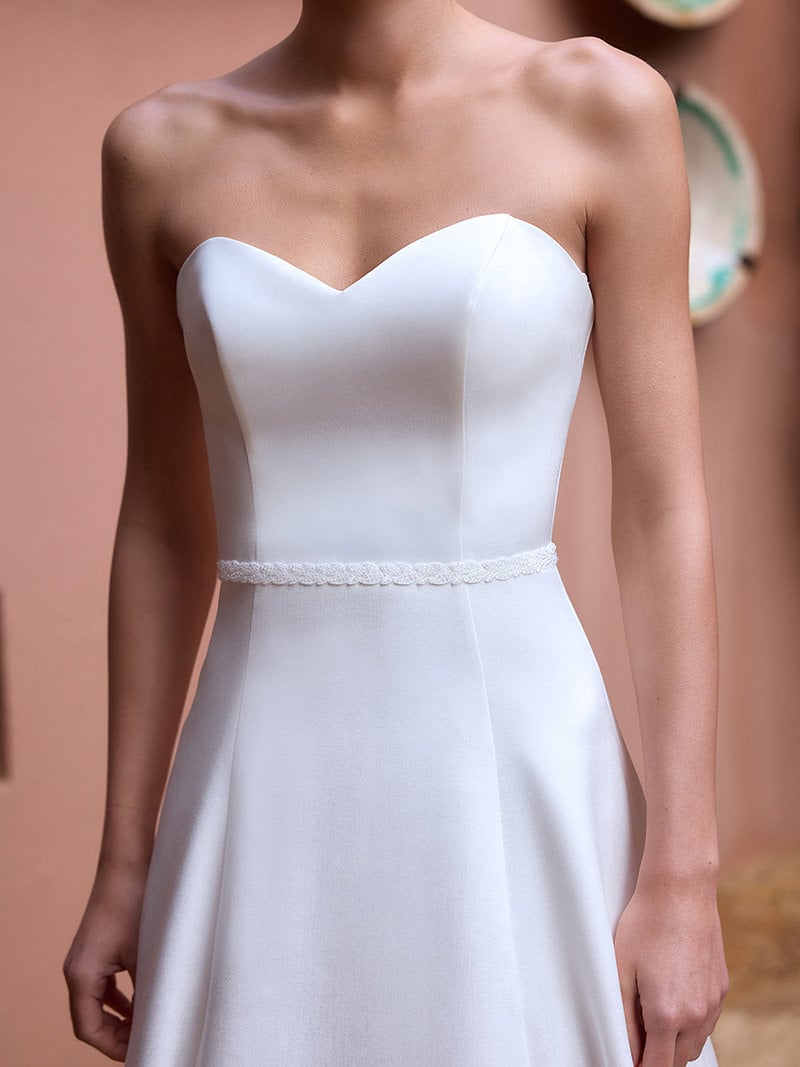
A belt or sash does something very few other bridal accessories can: it changes the entire proportion and character of a gown without a single alteration. The same simple crepe or satin dress can read as minimalist and modern with nothing added, romantic with a delicate pearl sash, or glamorous with a fully embellished crystal belt — all from the same base garment, at three very different price points and three very different customer conversations.
For a bride, that's a genuine styling discovery. For a boutique, it's a category that turns a single gown style into several distinct looks a consultant can offer, without carrying the stock cost of several distinct gowns.
How Bridal Belts and Sashes Change a Gown's Silhouette
Picking the right belt isn't simply a matter of colour-matching to the dress. The width, embellishment and placement of a belt each do a specific job in how a silhouette reads, and understanding that logic is what turns a consultant's suggestion from a guess into genuine styling expertise.
Thin, delicate belts — for elongating the silhouette
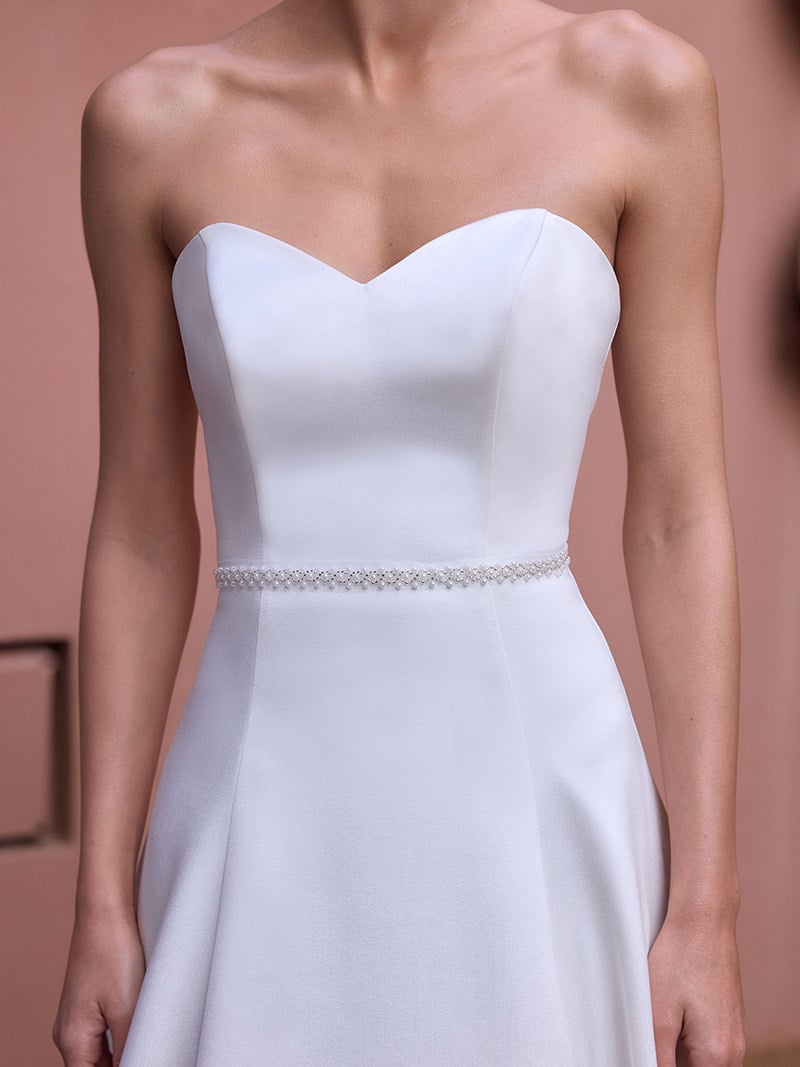
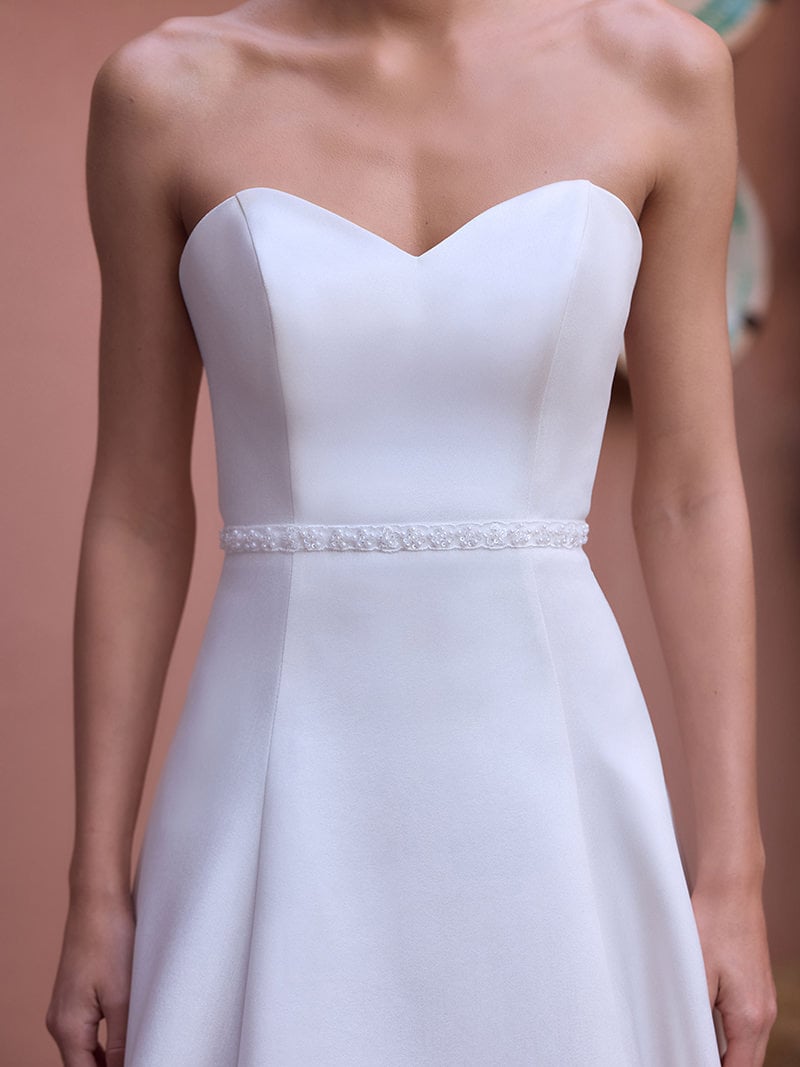
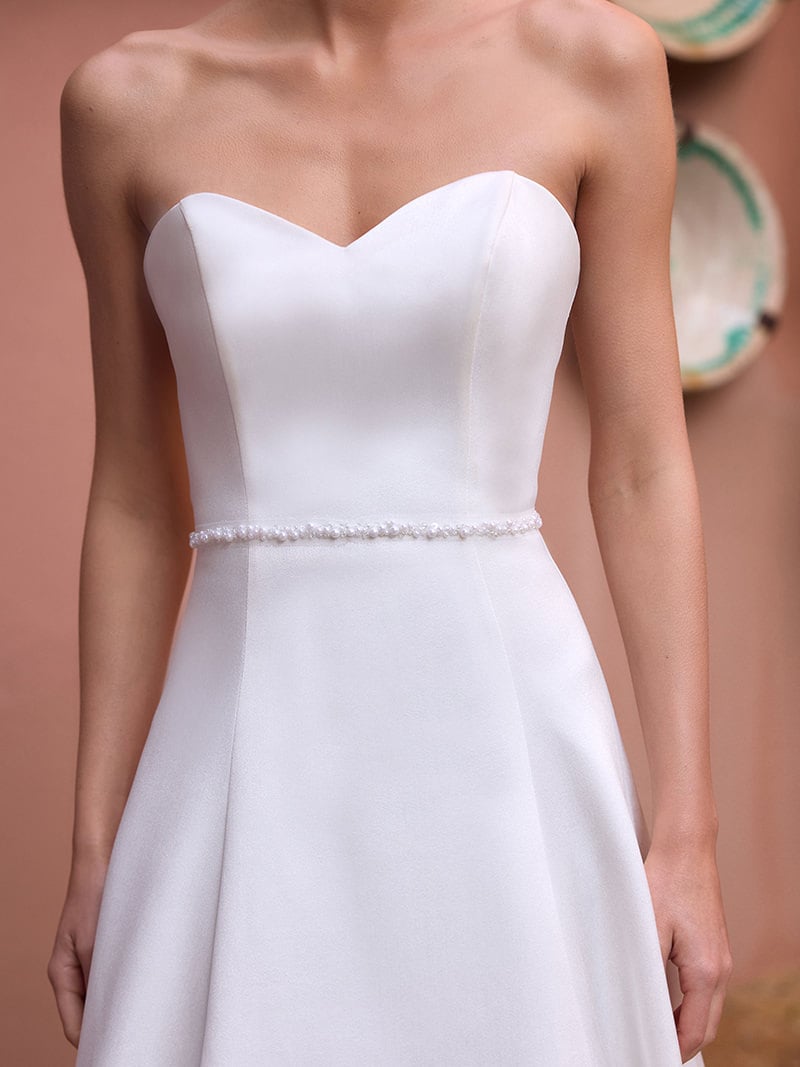
A narrow belt with fine detailing — delicate beadwork, a slim line of crystals, subtle pearls — softly defines the waist without cutting the eye's line across the body. This is the belt to reach for when a bride wants to lengthen her overall silhouette, particularly on column, sheath or flowing A-line gowns where an unbroken vertical line is part of the dress's appeal in the first place.
Wider, structured belts — for cinching and defining the waist
A wider belt does the opposite job deliberately: it creates a clear, defined waistline and adds structure to a softer or more flowing gown. This is the better recommendation for brides who want their waist visually accentuated, or who are wearing a looser silhouette that benefits from a stronger horizontal anchor point.
Fully embellished, statement belts — for glamour
A heavily beaded or crystal-covered belt turns simple styling into a genuine statement. This works particularly well on plainer gowns — unembellished crepe, satin or Mikado — where the dress itself was chosen for its clean lines, and the belt is where the bride wants her sparkle.
Soft, romantic embellishment — pearls, 3D flowers and delicate beading
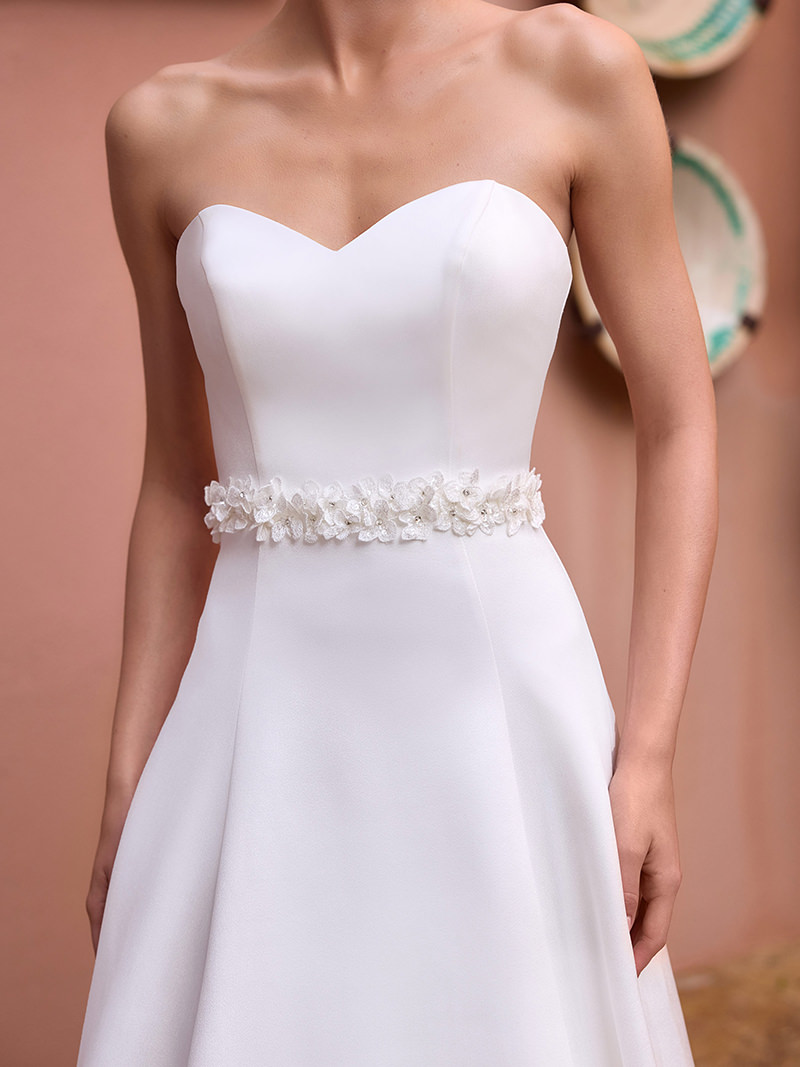
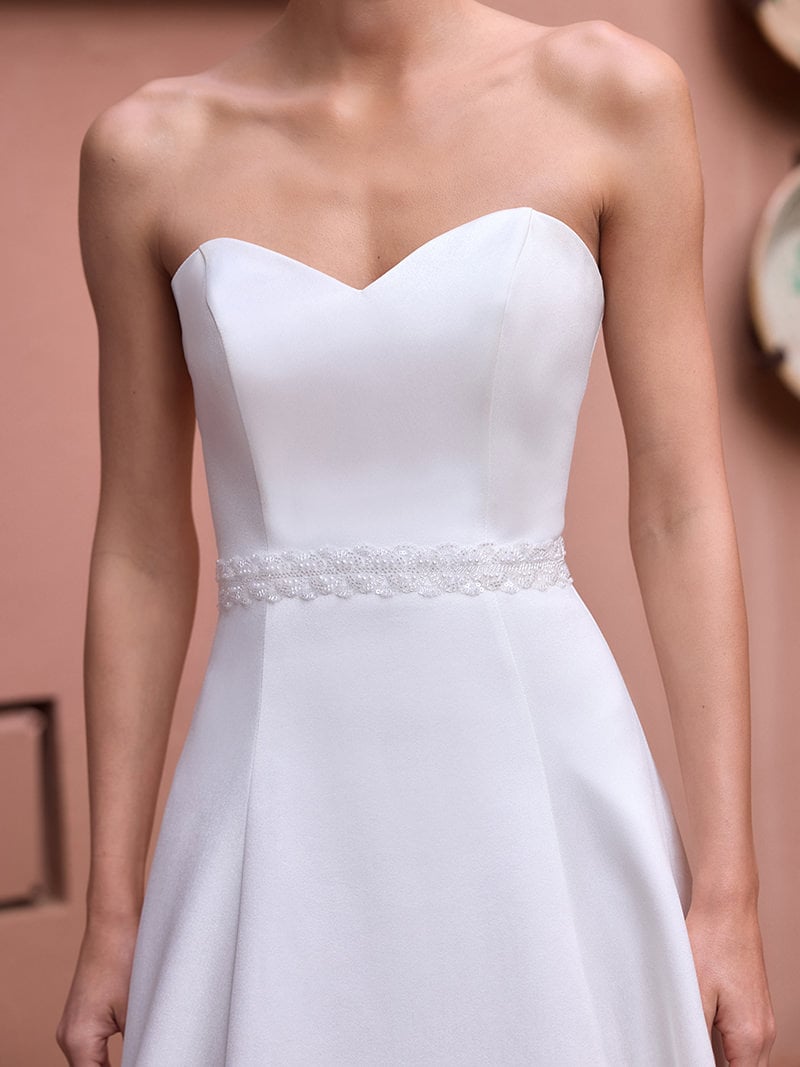
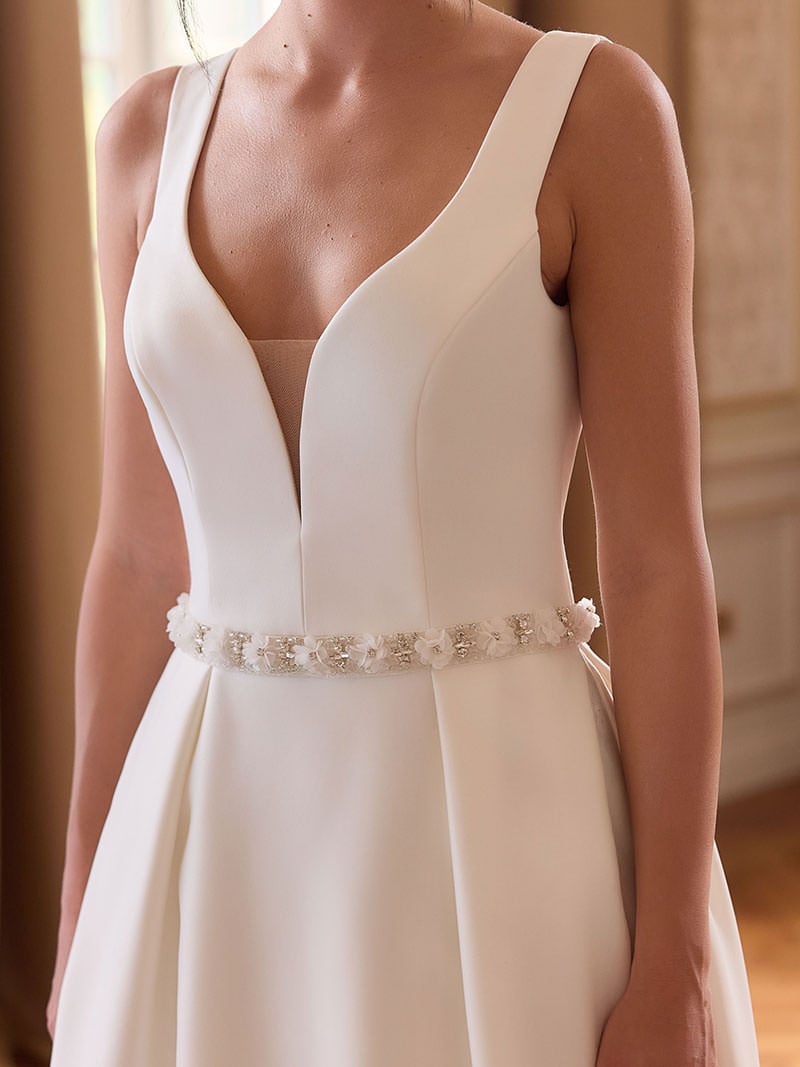
For brides who want detail without hard sparkle, pearl-embellished belts, floral appliqué or softly beaded designs add texture and interest while staying gentle and romantic — often the better pairing for lace gowns or vintage-inspired silhouettes, where a crystal-heavy belt can compete with the dress rather than complement it.
Matching Belt Style to Gown and Body Shape: A Quick Reference
| Bride's Goal | Recommend | Best Suited Gowns |
|---|---|---|
| Elongate the silhouette | Thin, delicate belt with fine detailing | Column, sheath, flowing A-line |
| Define and cinch the waist | Wider, more structured belt | Looser A-line, empire waist, flowing skirts |
| Add glamour and sparkle | Fully embellished crystal or beaded belt | Plain crepe, satin or mikado gowns |
| Add romantic texture | Pearl, 3D flower or soft beaded belt | Lace, vintage-inspired, softer silhouettes |
The goal in every fitting is the same, regardless of which category the belt falls into: the belt should add definition without visually cutting the gown's line in two, and it should complement the silhouette the bride has already chosen rather than compete with it.
The Retail Case for Building a Genuine Belt Category
Beyond the styling logic, there's a straightforward commercial argument for treating bridal belts as a proper category rather than an accessory afterthought.
- Low stockroom cost relative to gowns — a full belt range takes a fraction of the space and capital of an equivalent number of dress styles
- Fast, low-friction upsell — belts can be tried in seconds during a fitting that's already happening, with no separate appointment required
- Genuine personalisation without alteration — a belt lets a bride customise an off-the-rack gown without touching the construction, which appeals strongly to brides working to a timeline
- Repeat and add-on purchases — brides who bought their gown elsewhere will sometimes return specifically for a belt or sash to complete a look, particularly for a second outfit or reception change
- A genuine reason to bring a bride back into the boutique — for a final fitting, a styling session, or simply to see the belt against the finished gown
What Makes a Good Bridal Belt Supplier?
Not every accessories line does this category justice. A handful of factors separate a bridal belt supplier worth building a range around from one offering a handful of forgettable add-ons.
Fabric and embellishment variety
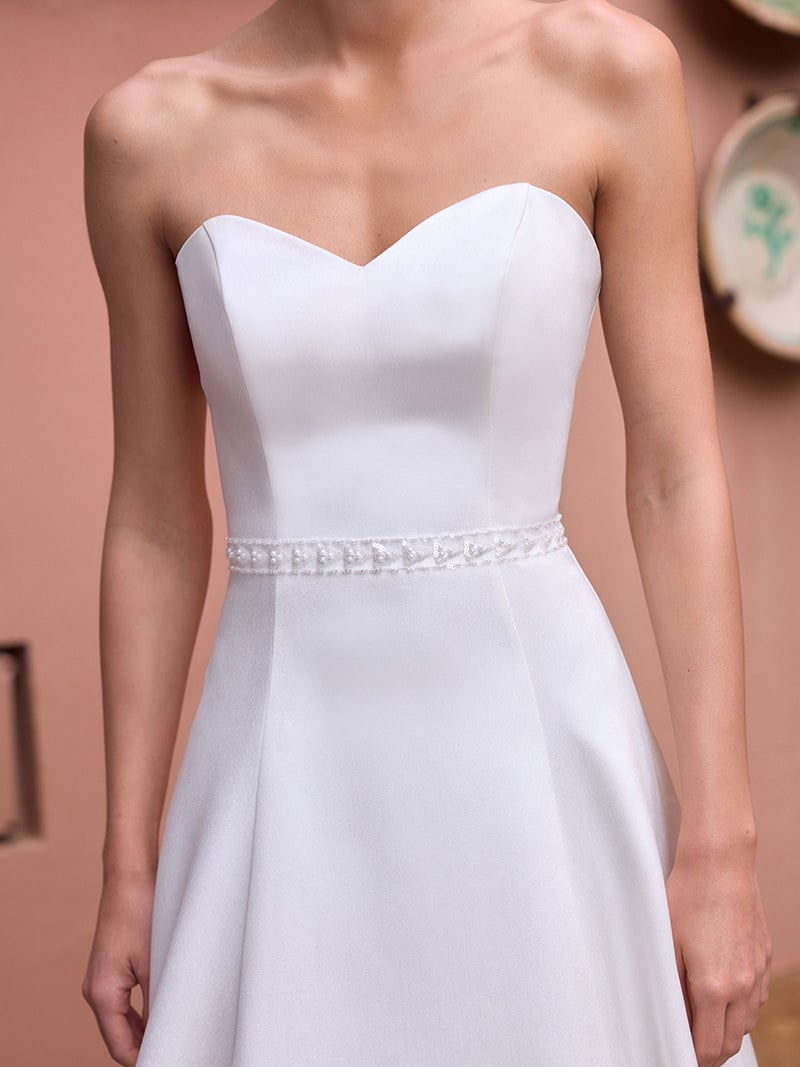
A genuine range needs more than one fabric base — lace, tulle, organza, Mikado and stretch crepe all behave and photograph differently — alongside a real spread of embellishment types: pearls, beads, 3D florals and stone settings, so a consultant has an actual answer for both the minimalist bride and the maximalist one.
Colour accuracy against gown shades
Bridal whites are notoriously inconsistent between suppliers. A belt in the wrong shade of ivory against a gown reads as a mismatch rather than a styling choice, so colour consistency — ivory, silver, gold and the softer blush and powder pink tones increasingly requested by modern brides — matters more in this category than almost any other accessory.
Sizing that actually fits
Belts need to sit correctly against the gown's natural waistline, which means a genuine size range — not a single one-size design assumed to work for every body. A supplier offering a proper spread from small through to larger sizes saves a boutique from turning away exactly the upsell opportunity this category is built around.
Stock availability and reliable replenishment
Because belts are frequently an in-appointment, spontaneous add-on sale, a boutique needs genuine confidence that a best-selling style will still be available to reorder next month, not sitting on a three-month backorder during peak wedding season.
Bridal Belts From Bianco Evento
Bianco Evento's belt collection is built around exactly this logic: a genuine spread of fabrics — lace, tulle, organza, mikado and stretch crepe — finished with pearls, beads, 3D floral appliqué and stone embellishments, across ivory, silver, gold and softer blush and powder pink tones, with sizing that runs from small through to 3XL rather than assuming one belt fits every bride.
That range means a boutique can genuinely offer all four styling paths covered in this guide — elongating, cinching, glamorous and romantic — from a single, well-chosen supplier relationship, rather than piecing together a category from several smaller, less reliable sources.
As a European wholesale bridal wear brand supplying boutiques internationally with no minimum order requirement, Bianco Evento has a wide range of the finest bridal belts for boutiques to browse and build a belt category that genuinely reflects the range of brides walking through the door.
Frequently Asked Questions
Are bridal belts a good product category for boutiques to stock?
Yes. Belts and sashes are low-cost to stock relative to gowns, sell quickly as an in-appointment upsell, and let brides personalise an off-the-rack dress without any alteration — making them one of the more efficient categories a boutique can build out.
How do I choose the right bridal belt supplier?
Look for genuine fabric and embellishment variety, accurate and consistent bridal white and metallic tones, a proper size range rather than a single fit, and reliable stock availability and replenishment — particularly through peak wedding season when demand for reorders is highest.
What is the difference between a bridal belt and a bridal sash?
The terms are often used interchangeably, though a belt typically refers to a more structured band that sits at the natural waist, while a sash tends to be a softer, ribbon-like piece, sometimes tied rather than fastened. Both serve the same core styling purpose.
Which gowns work best with a thin, delicate belt?
Column, sheath and flowing A-line gowns tend to pair particularly well with narrower, more delicate belts, since the thin line continues rather than interrupts the gown's natural vertical silhouette.
Should every gown in a boutique be paired with a belt option?
Not necessarily, but every consultant should have belt options genuinely available to offer during a fitting. Not every bride will want one, but for those who do, having a considered range on hand — rather than a single default option — is what turns the suggestion into a sale.
Conclusion — A Small Category With an Outsized Impact
Bridal belts and sashes rarely get the strategic attention they deserve in a boutique's buying plan, yet few categories offer the same combination of low stock cost, fast sell-through and genuine styling value to the bride standing in the fitting room.
Building a proper belt range — covering elongating, cinching, glamorous and romantic styling paths, in fabrics and sizes that actually fit the brides coming through the door — turns what's often treated as an afterthought into one of the more reliable, high-margin categories on the shop floor.